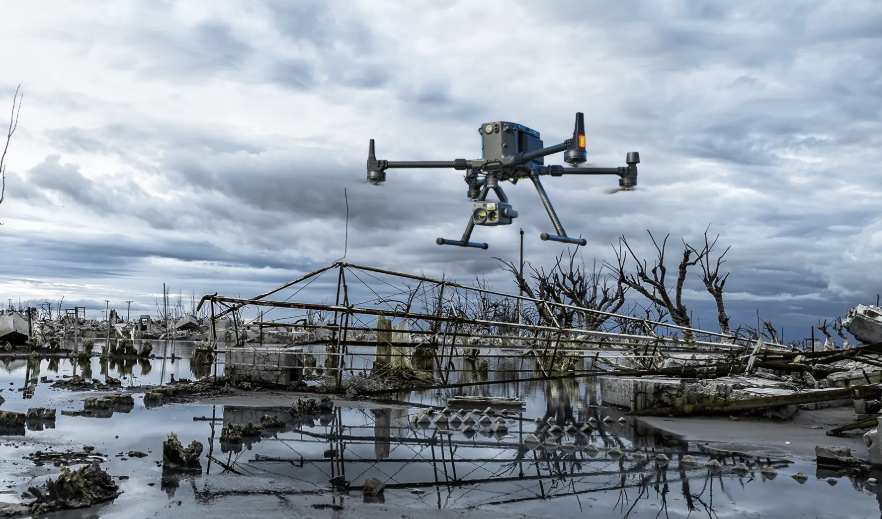
Drones have emerged as crucial tools in disaster management. They provide rapid aerial surveys that yield high-resolution images for damage assessment. These unmanned aerial vehicles enhance search and rescue efforts with real-time tracking capabilities. Furthermore, they enable the swift delivery of humanitarian aid to isolated areas. As the technology evolves, its implications for future preparedness strategies warrant closer examination. Understanding their full potential could reshape how communities respond to crises.
The Role of Drones in Damage Assessment
Although traditional methods of damage assessment often involve extensive manpower and time, drones have emerged as a transformative tool in this domain.
Utilizing advanced drone technology, aerial surveys can rapidly capture high-resolution images and data, enabling quicker analysis of disaster impacts.
This innovation not only reduces the risks to human assessors but also enhances the accuracy and efficiency of damage evaluations, promoting informed recovery efforts.
Enhancing Search and Rescue Operations
As search and rescue operations become increasingly critical in the aftermath of disasters, the integration of drones has significantly enhanced their effectiveness.
Drones facilitate real time tracking of missing individuals, allowing responders to locate them swiftly.
Additionally, aerial mapping provides comprehensive overviews of affected areas, optimizing resource allocation and ensuring efficient rescue efforts.
This technology revolutionizes traditional methods, ensuring timely intervention in emergencies.
Delivering Humanitarian Aid and Supplies
The application of drones extends beyond search and rescue operations to the critical task of delivering humanitarian aid and supplies in disaster-stricken areas.
Drones facilitate efficient aerial logistics, enabling swift access to hard-to-reach locations. Their capability for automated distribution ensures that essential resources are delivered promptly, significantly enhancing response times and reducing reliance on traditional transport methods, ultimately saving lives in urgent situations.
Data Collection and Analysis for Future Preparedness
While traditional methods of data collection in disaster management have often been limited by accessibility and timeliness, drones offer innovative solutions that enhance the gathering and analysis of critical information.
Aerial surveys conducted by drones facilitate precise data mapping, allowing for real-time insights into affected areas. This information supports better preparedness strategies, enabling communities to respond effectively to future disasters and mitigate potential impacts.
Conclusion
In conclusion, drones have revolutionized disaster management by providing rapid damage assessment, improving search and rescue efforts, and facilitating the delivery of essential supplies. Notably, studies indicate that the use of drones can reduce response times by up to 70%, significantly enhancing the effectiveness of disaster response initiatives. As technology continues to advance, the integration of drones into emergency management strategies promises to further optimize preparedness and response capabilities in the face of natural disasters.