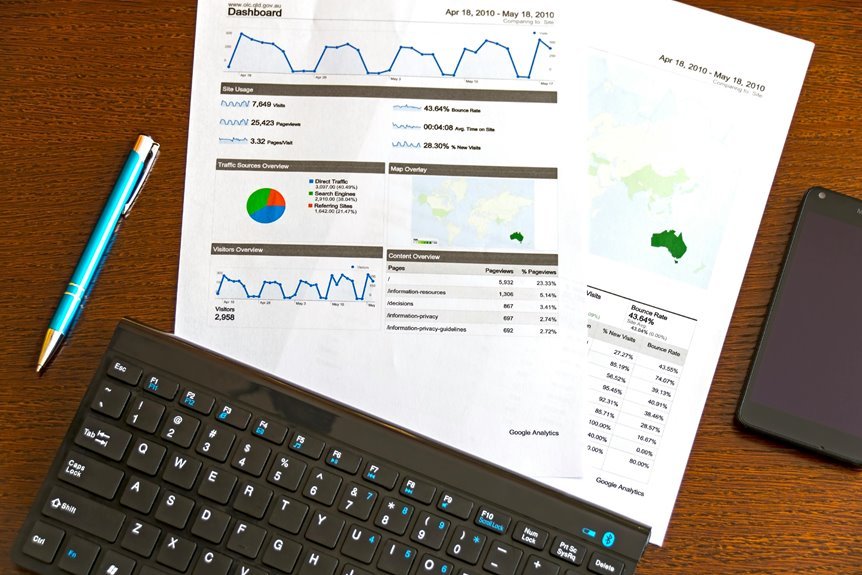
The Industry Insights Dashboard represents a significant advancement in data analysis tools, characterized by its sophisticated visualization capabilities and intuitive interface. It enables organizations to access real-time data, facilitating swift decision-making in response to market dynamics. By fostering a culture of informed decision-making, the dashboard aims to enhance operational efficiency. However, the true impact of its implementation and the measurable outcomes remain to be explored further.
Key Features of the Industry Insights Dashboard
The Industry Insights Dashboard offers a range of key features designed to enhance data analysis and decision-making processes.
Its advanced visualization tools allow users to interpret complex data intuitively, while the user interface ensures seamless navigation.
Benefits of Utilizing Real-Time Data
How can real-time data transform decision-making processes across industries?
By leveraging real-time analytics, organizations empower themselves to make data-driven decisions swiftly and accurately. This immediate access to information enhances agility, allowing businesses to respond proactively to market changes and customer needs.
Ultimately, the integration of real-time data fosters a culture of informed decision-making, significantly improving operational efficiency and strategic outcomes.
Analyzing Market Trends With Confidence
Real-time data not only enhances operational efficiency but also significantly improves the ability to analyze market trends with confidence.
By leveraging predictive analytics, organizations can anticipate shifts in consumer behavior, thereby optimizing user engagement.
This data-driven approach empowers businesses to make informed decisions, adapt strategies promptly, and ultimately fosters a more agile environment, crucial for thriving in a dynamic market landscape.
Case Studies: Success Stories of Dashboard Implementation
While organizations across various sectors increasingly adopt industry insights dashboards, several notable case studies illustrate the transformative impact of these tools on decision-making and operational success.
Successful implementations often address dashboard challenges through strategic approaches, such as user training and iterative feedback.
These strategies empower teams to harness data effectively, ultimately leading to enhanced performance, informed choices, and greater organizational agility in dynamic environments.
Conclusion
In a world where data overload is often the norm, the Industry Insights Dashboard emerges as a beacon of clarity, proving that simplicity can indeed be complex. Ironically, one might expect that the abundance of real-time data would lead to decision paralysis; however, this tool transforms chaos into confident action. By fostering informed decision-making, it not only enhances operational efficiency but also highlights how, sometimes, the key to progress lies in embracing a well-structured digital solution.